
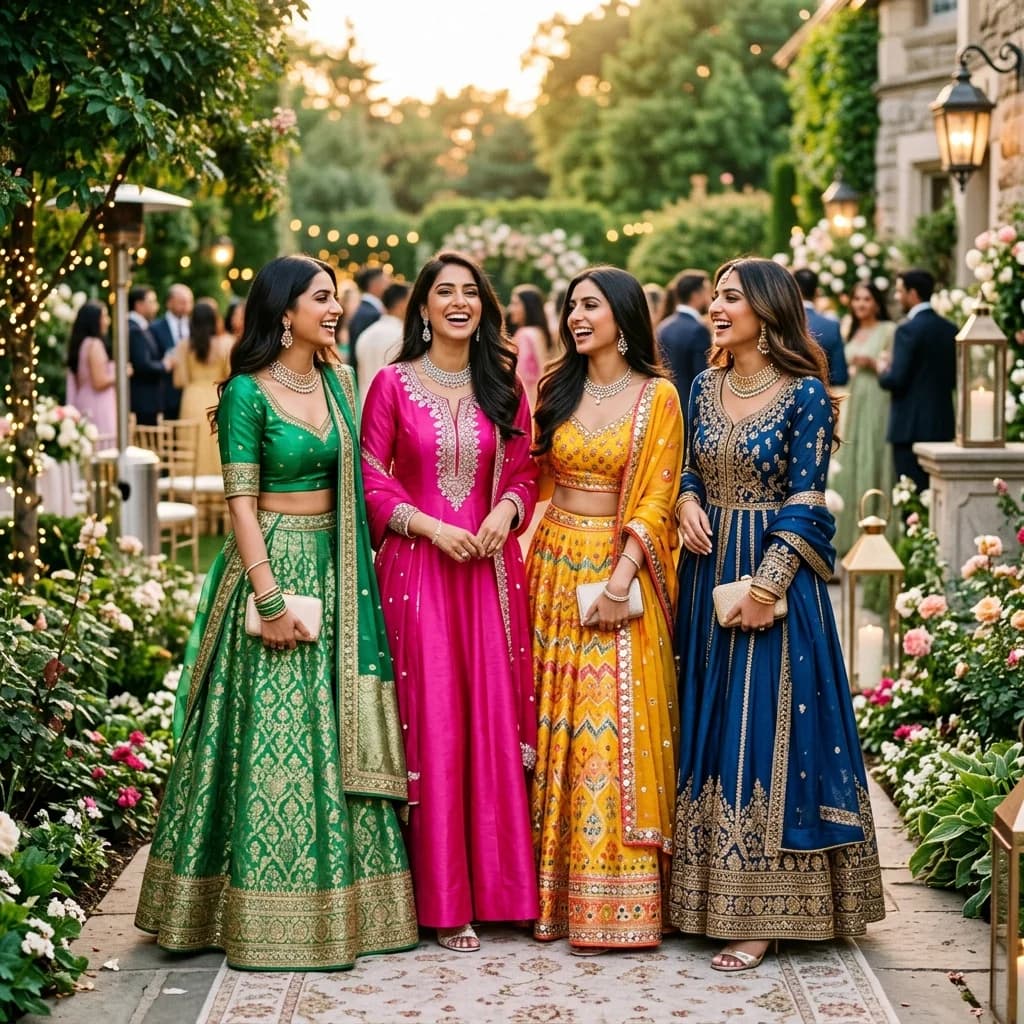
Indian bridal fashion is shifting in 2026. The maximalist look that dominated wedding wear for years is giving way to something more refined. Brides are choosing pieces that speak through craftsmanship rather than spectacle. Quiet luxury is the defining theme this season.
Muted colour palettes are leading the way. Dusty rose, champagne gold, sage green, and ivory are replacing the traditional bold reds and magentas. These softer tones let the embroidery and fabric texture take center stage. They also photograph beautifully in both natural and artificial light.
Heirloom embroidery techniques like zardozi, tilla, and parsi gara work are seeing a revival. The difference this time is restraint. Instead of covering every inch, embroideries are used as accent details on cuffs, hemlines, and dupattas. This creates a sophisticated look that feels modern yet rooted in tradition.
Silhouettes are also evolving. The rigid A line lehenga is being replaced by flowing skirts with soft mermaid cuts and subtle trains. Blouses are becoming more architectural with interesting necklines and asymmetric cuts. Every detail is designed to make the outfit memorable from every angle.
The biggest shift is the rise of rental culture among brides. More women are choosing to rent their wedding lehenga rather than buy it. A designer piece worn once deserves to be worn again. VastraKart makes this easy with fresh from atelier pieces at a fraction of the retail price.
For the reception, gowns and fusion wear continue to gain popularity. Floor length dresses in crepe and satin with detachable trains offer a modern alternative to the traditional look. The key is choosing pieces that feel authentic to your personal style while honouring the celebration.